Michigan Central
ADAPTIVE BUILDING ANALYSISClient: Michigan Central
Location: Detroit, MI
Year: 2022 - 2023
Overview
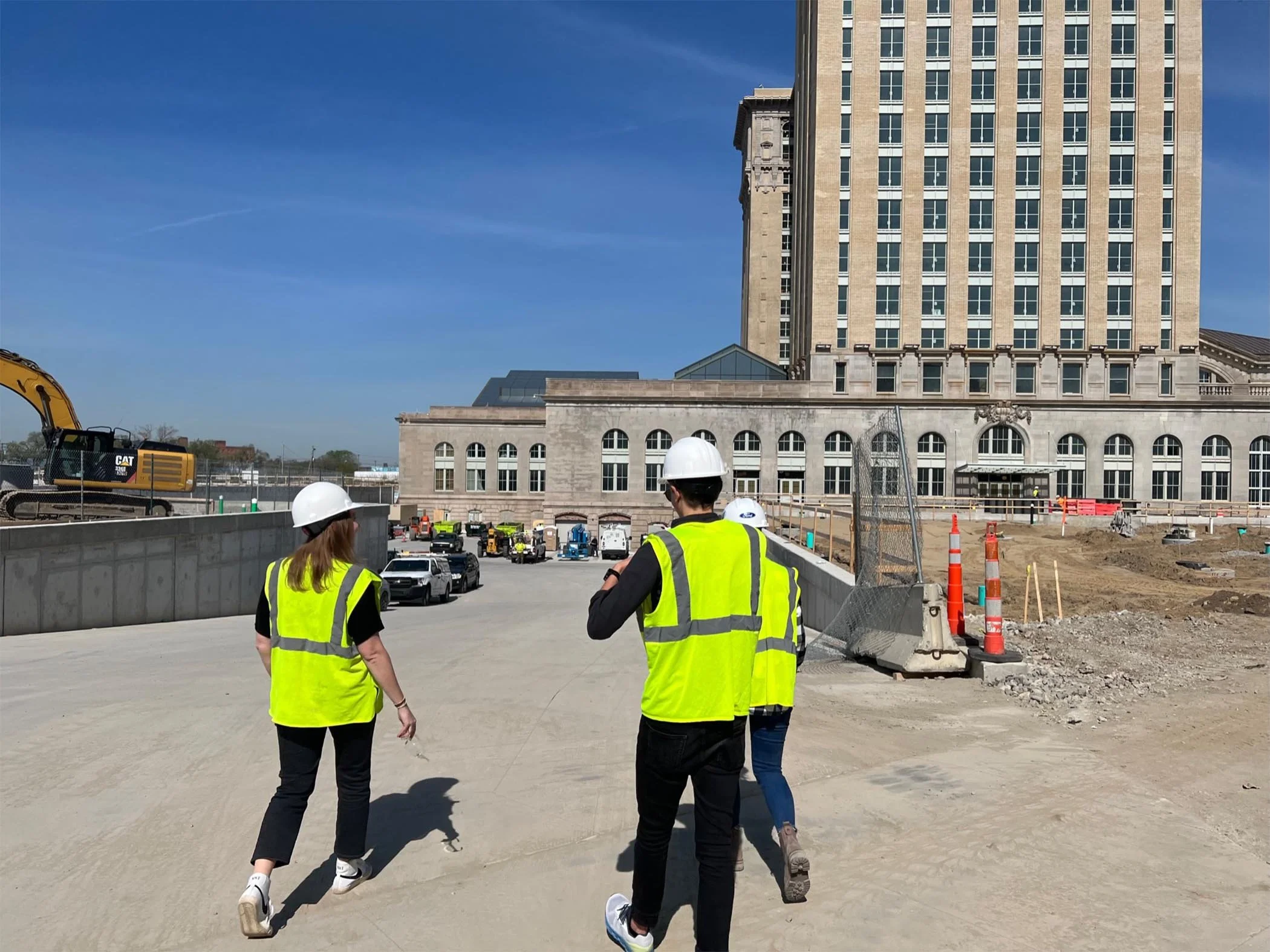
The historic Michigan Central train station sat vacant for decades – a monument to a bygone era of transportation, in the center of Detroit, a city famous for its automotive production. The asset was crumbling, but filled with potential to signal the next chapter of mobility innovation. Bill Ford, along with development partners and the State of Michigan, invested nearly $1 billion in transforming Michigan Central into a forward-facing campus for technical and social innovation creating the future of mobility.
The project took nearly a decade, and was on track to deliver into a world radically transformed by the COVID pandemic. Every company was grappling with the shift to hybrid to work – balancing cost savings with the risk of short-circuiting collaborative in-person innovation. Most were failing. Hybrid policies were producing the worst of both worlds: employees quiet-quitting while companies coasted on relational credit built before the pandemic. That credit was eroding fast as new hires onboarded without context and teams lost the connective tissue that makes innovation possible.
Michigan Central’s leadership wanted to create a campus for innovation… did the world need it? What should innovation – specifically mobility innovation – look like in the post-COVID era? What do teams need from the experience of a physical space?
What We Did
Field States began with multi-factor research – a landscape scan of comparable spaces worldwide, user interviews with prospective corporate users and subject matter experts, and an analysis of emerging workplace dynamics. We discovered a structural shift: professional life was moving away from the conventional “9-to-5” model, to what we called “90-to-5” – roughly 90 days remote and five days in person, for a focused, saturated, experiential, and collaborative innovation sprint. This model preserves innovation quality and team dynamics while allowing companies to reduce real estate spend and draw from a national talent pool.
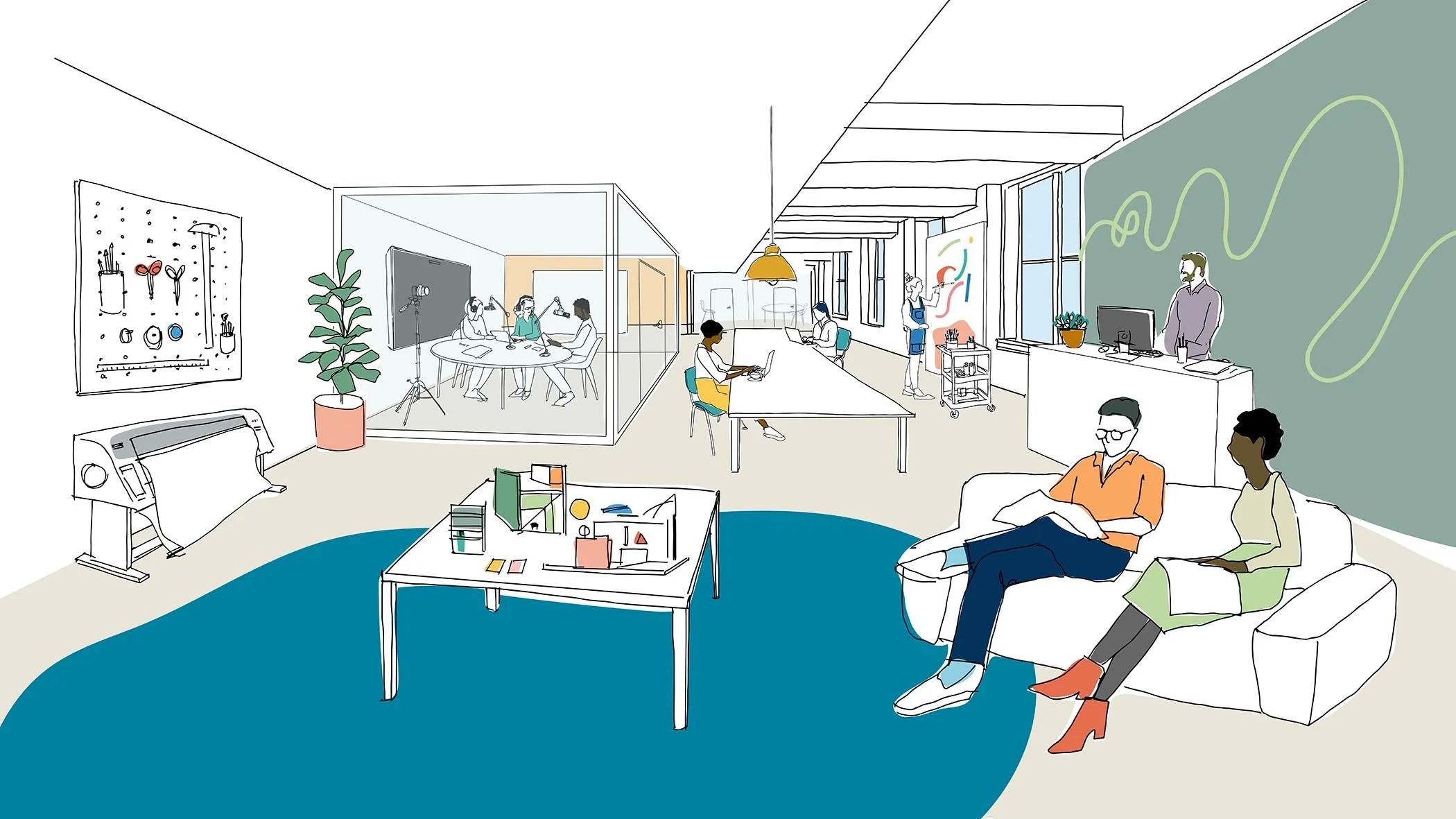
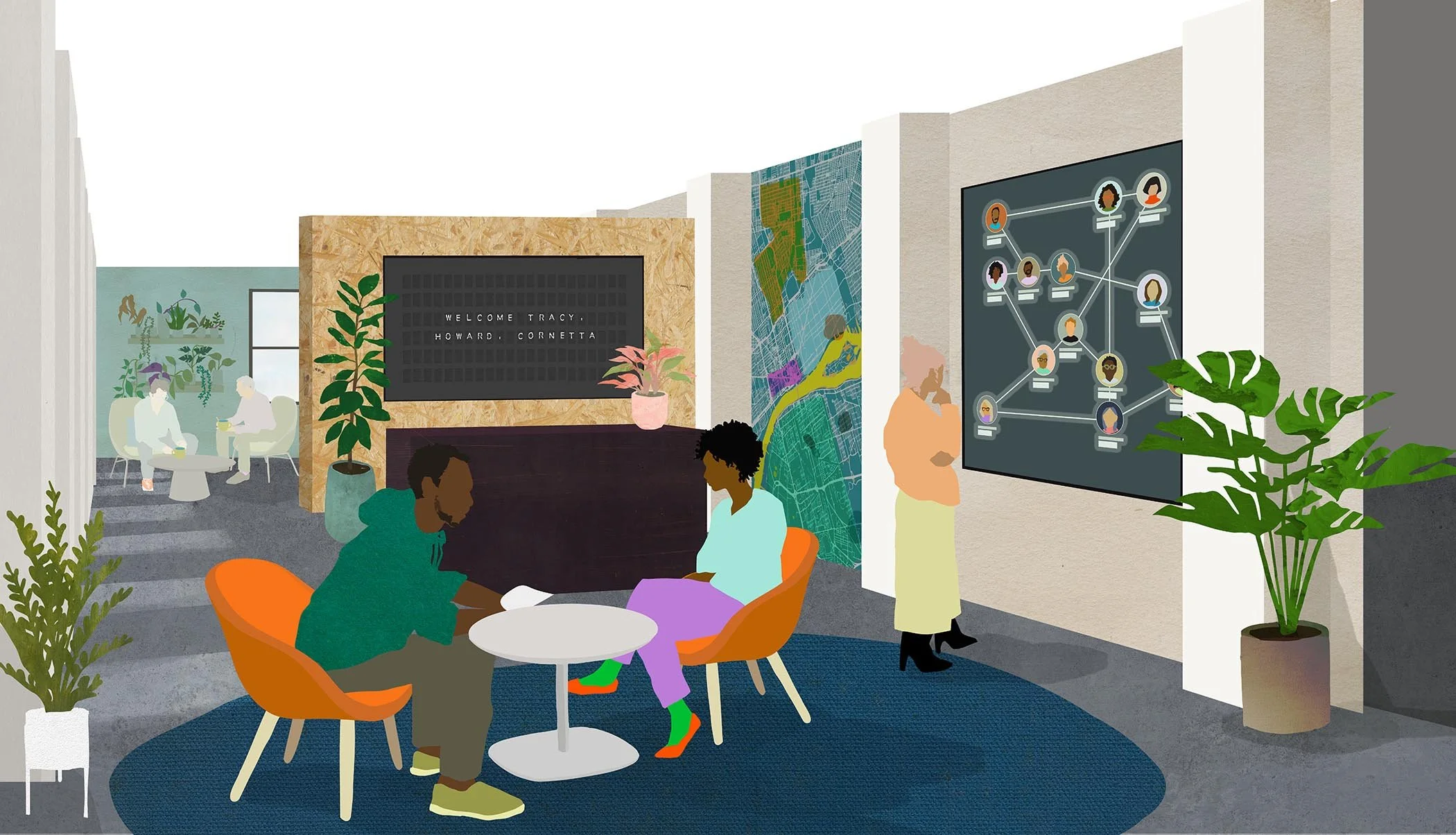
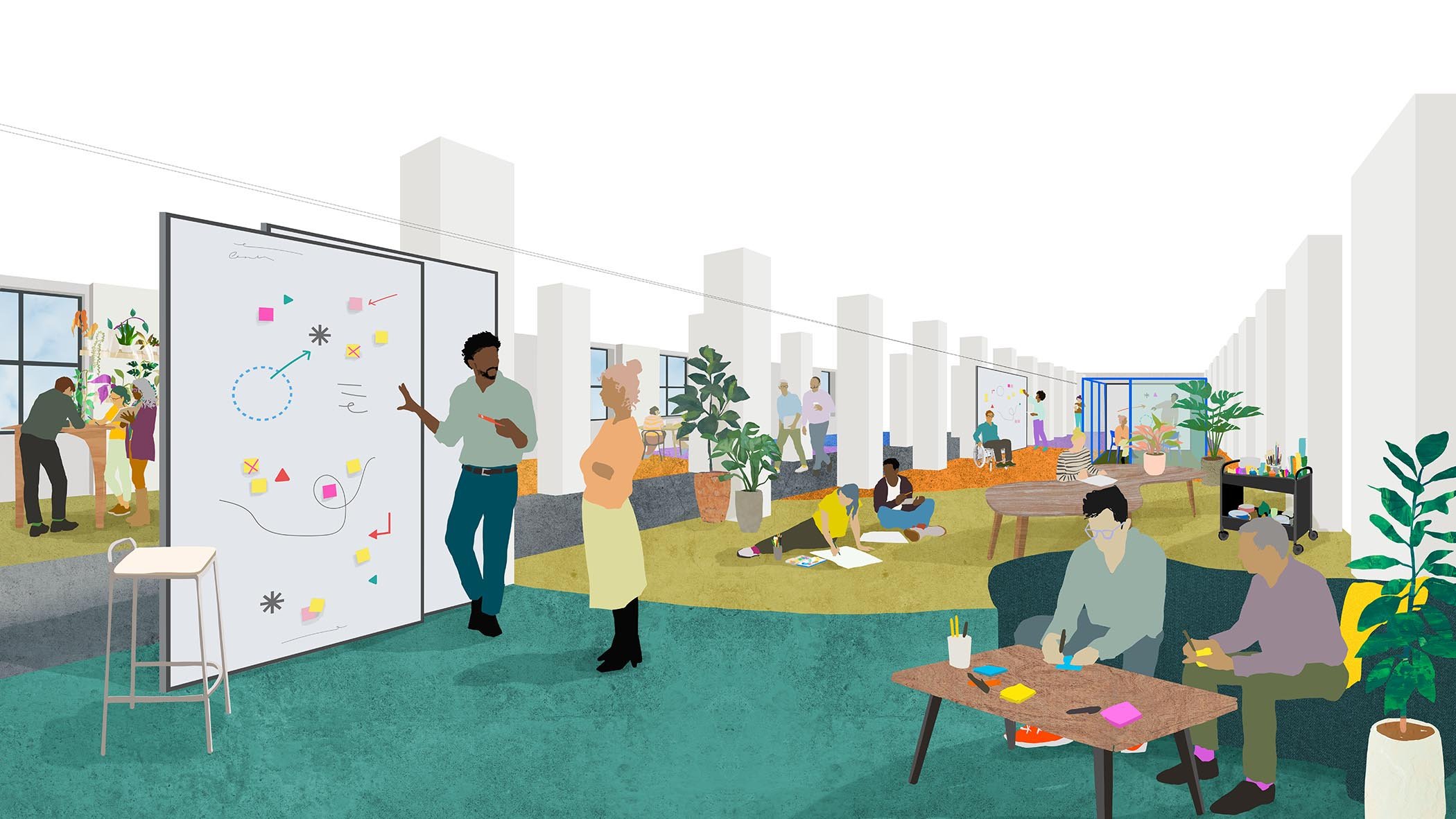
We then created the Sprint Studio – a space designed from the ground up to provide the best of remote and the best of in-person. The Sprint Studio was interior design, yes, but it was also a complete product, with purpose-built technologies integrated into the space and a curated service layer.
What We Made
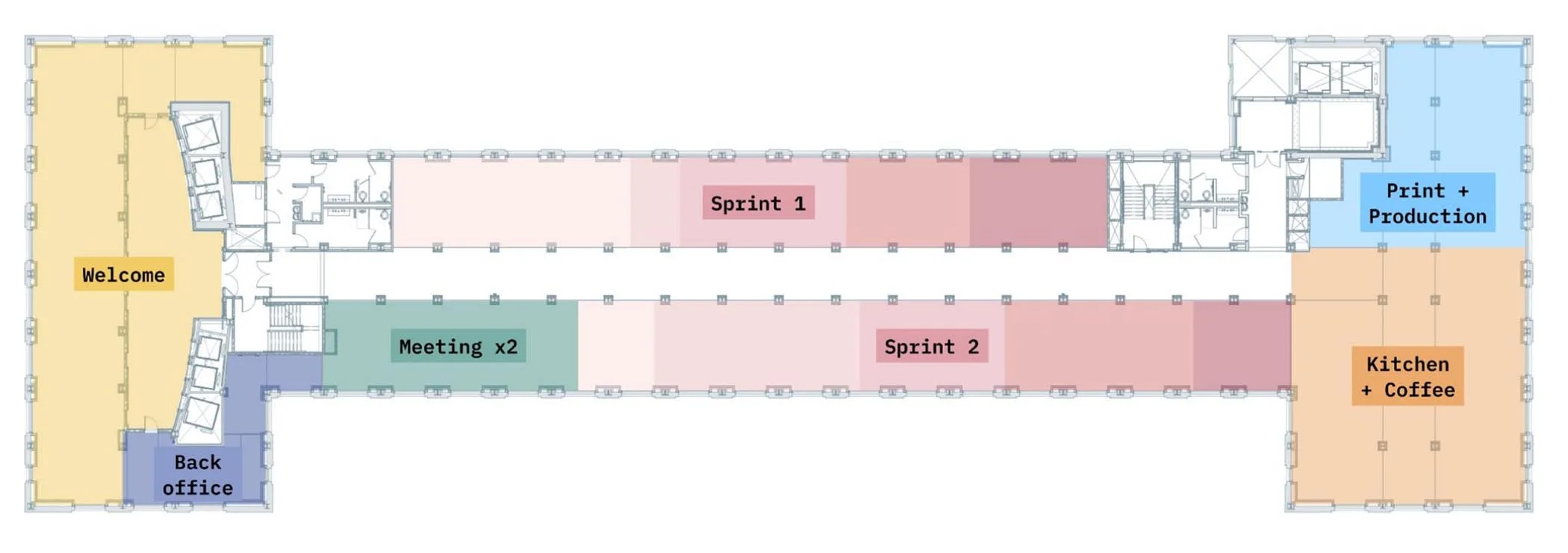
A complete concept design for the Sprint Studio, combining spatial design, digital technology, and service experience into a single product. Deliverables included a landscape scan of precedent spaces and technologies, a discovery research report on the structural shift in how companies work, a schematic design package (design principles, conceptual floor plans, test fits, operationalization framework, social impact strategy, and key feature specifications, from automated idea-capture technology to a concierge service for team excursions), and an external pitch deck for validating demand with corporate users.
Impact
The deliverable portfolio equipped Michigan Central’s team to validate the Sprint Studio concept with potential corporate users, carry forward detailed operationalization, and brief architects and technology partners. Field States translated a foundational insight about the future of work into a buildable, testable architecture and technology product.